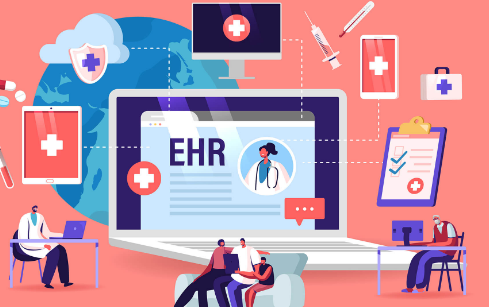
Electronic Health Records (EHRs) represent a significant shift in healthcare documentation. They offer improved accessibility and accuracy in managing patient data. However, the transition to EHR systems is not without complications. Issues such as user resistance and integration challenges often arise. Understanding these dynamics is essential. The implications for patient care and future advancements in EHR technology raise critical questions about the evolving landscape of healthcare management.
Benefits of Electronic Health Records
Although the transition to Electronic Health Records (EHRs) involves significant initial investment and training, the benefits they offer to healthcare systems are substantial.
Enhanced data security measures protect sensitive patient information, thereby improving patient privacy.
Furthermore, EHRs facilitate streamlined communication among providers, ensuring timely access to critical health data.
These advancements ultimately contribute to more efficient, patient-centered care, promoting overall healthcare system effectiveness.
Read Also: Educational Technology Trends
Challenges in Implementing EHR Systems
Implementing Electronic Health Record (EHR) systems poses several challenges that can hinder their effectiveness within healthcare organizations.
User resistance often arises due to concerns about workflow disruptions and the learning curve associated with new technology.
Additionally, system integration issues can impede data sharing between disparate systems, complicating interoperability and limiting the potential benefits of EHRs in enhancing overall healthcare delivery.
Impact on Patient Care and Safety
The challenges associated with implementing Electronic Health Record (EHR) systems can significantly affect patient care and safety outcomes.
Effective patient engagement hinges on the accessibility and accuracy of health data, which can be compromised by inadequate systems.
Furthermore, robust data security measures are essential to protect sensitive information, as breaches may undermine trust and ultimately impact patient care quality and safety.
The Future of EHR Technology
How might advancements in technology reshape the landscape of Electronic Health Records (EHR) in the coming years?
Future EHR systems will likely prioritize interoperability standards, enabling seamless data exchange across platforms.
Enhanced user interfaces will improve clinician efficiency and patient engagement.
As these technologies evolve, they may empower patients with greater control over their health information, fostering a more personalized healthcare experience.
Conclusion
In conclusion, while the implementation of Electronic Health Records (EHRs) presents undeniable challenges, such as user resistance and integration issues, the transformative potential of these systems is substantial. Imagine a future where seamless interoperability enables healthcare providers to access comprehensive patient histories at their fingertips, thereby reducing errors and enhancing decision-making. As advancements continue to address current limitations, EHRs promise to become a cornerstone of efficient, patient-centered care, ultimately improving health outcomes across diverse populations.